 Business Waste Removal Kentish Town - Health & Safety Policy
Policy scope and purpose
 This Health and Safety policy sets out the commitments and procedures for business waste removal operations carried out by our rubbish company service area. The policy applies to all colleagues, contractors and visitors engaged in commercial waste collection, transfer and disposal activities, and to any subcontracted teams performing duties on our behalf. The objective is to maintain a safe workplace, minimise risk to the public and protect the environment while delivering professional rubbish removal services.
Responsibilities and organisation
Management will ensure that adequate resources, competent personnel and clear lines of responsibility are in place. Managers are responsible for risk assessments, implementing controls and monitoring compliance across the commercial waste removal process. Supervisors must ensure staff follow safe systems of work and that equipment is maintained. Employees are required to follow procedures, report hazards and take reasonable care for their own safety and that of others.
 Key responsibilities include:
- Risk assessments: regular, documented assessments for all tasks including manual handling, vehicle operations and hazardous waste handling.
- Training: induction and refresher programmes tailored to refuse collection, segregation, lifting and spill response.
- Equipment: provision and maintenance of PPE, lifting aids, secure containment and vehicle safety systems.
- Permits and licensing: ensuring activities comply with waste carrier and environmental licencing where required.
These controls are applied across the full service area to ensure consistent standards for commercial and business waste collection and to support safe rubbish removal operations.
Safe systems of work for business waste management include standard operating procedures for: vehicle loading and unloading, segregation of recyclable and non-recyclable materials, containment of hazardous substances, and the use of mechanical handling aids. All procedures are risk-based and reviewed after incidents or significant changes to operations. Permit-to-work arrangements are used for non-routine tasks and work in confined spaces.
Training and competence are fundamental. Staff receive documented training in manual handling, hazardous waste recognition, spill control and emergency response. Refresher training is scheduled and records retained. Competence checks and on-site supervision ensure that teams conducting rubbish clearance and commercial waste collection maintain high standards and understand the particular risks associated with large-scale or mixed loads.
Personal protective equipment (PPE) is provided where risk assessments indicate need. Typical PPE includes high-visibility clothing, safety boots, gloves suitable for waste handling, eye protection and respiratory protection where dust or fumes may occur. PPE use is mandatory, and replacement/maintenance is the employer's responsibility.
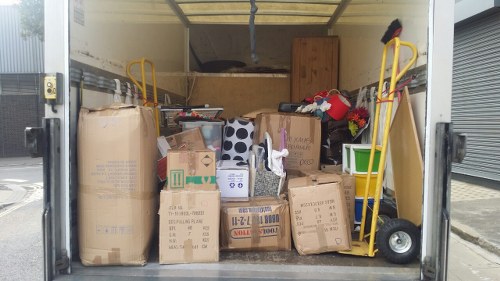
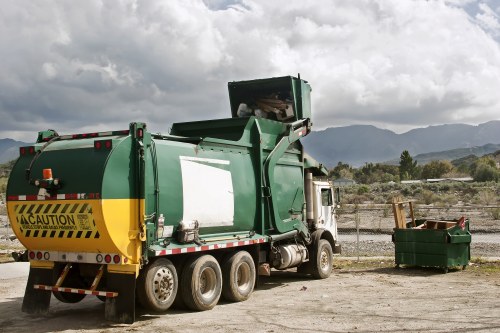
Vehicle and site safety measures are applied to reduce risks during transfers and in the company service area. Vehicles are inspected daily and maintained according to schedule. Safe loading weights are enforced, and vehicles are equipped with appropriate containment systems to prevent spillage. Safe access, traffic management and exclusion zones are implemented at client sites and transfer facilities. Emergency equipment including spill kits and fire extinguishers are available and routinely inspected.
 Incident reporting and investigation: all accidents, near misses and environmental releases are reported immediately, recorded and investigated to identify root causes and corrective actions. Lessons learned are communicated across teams. The policy emphasises a no-blame culture for reporting, combined with accountability for adherence to required controls and standards.
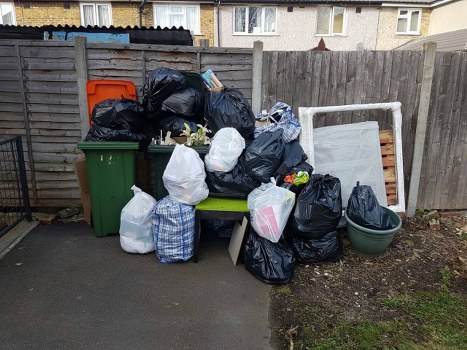
 Environmental controls and waste segregation: robust procedures ensure separation of recyclables, general waste and hazardous materials to reduce contamination and ensure lawful disposal. Chemical, medical or other hazardous waste streams are segregated, labelled and handled by trained personnel in accordance with relevant regulations. Records of waste movements and disposal are maintained to support traceability and regulatory compliance.
Monitoring, review and continuous improvement: performance is monitored through audits, inspections and KPI reporting covering safety incidents, training completion, vehicle checks and environmental compliance. This policy will be reviewed at least annually, and after any significant incident or legislative change. Continuous improvement is sought through staff engagement, innovation in equipment and alignment with emerging best practice for commercial waste removal and rubbish removal services.
Health and wellbeing measures support staff performing physically demanding roles. Programs include manual handling training, access to welfare facilities, and occupational health support where necessary. Stress, fatigue and ergonomics are considered in shift planning and task allocation.
Policy endorsement: this Health and Safety policy is endorsed by senior management and communicated across the organisation. All personnel involved in business waste removal and associated services are expected to adhere to its principles to protect people, property and the environment while delivering efficient and responsible rubbish removal across the service area.
